
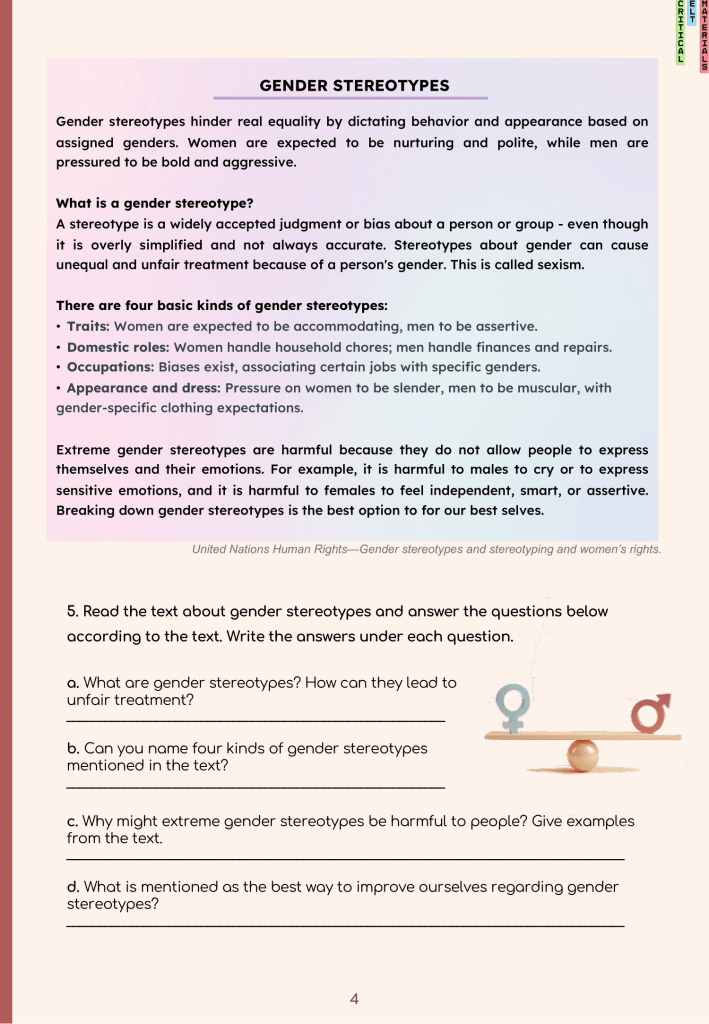
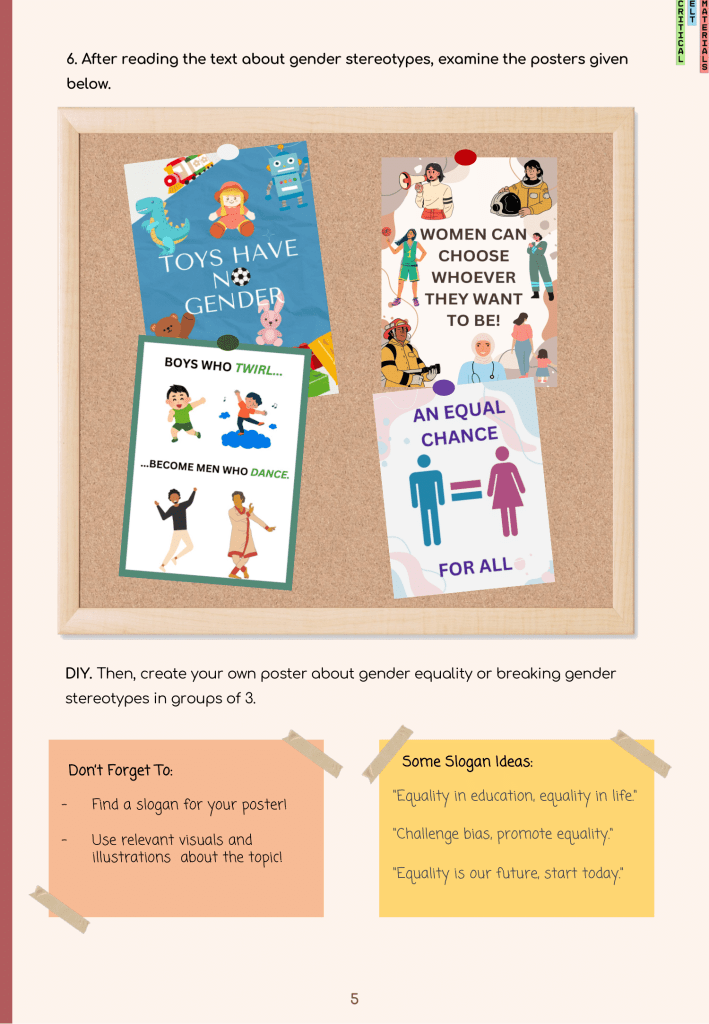
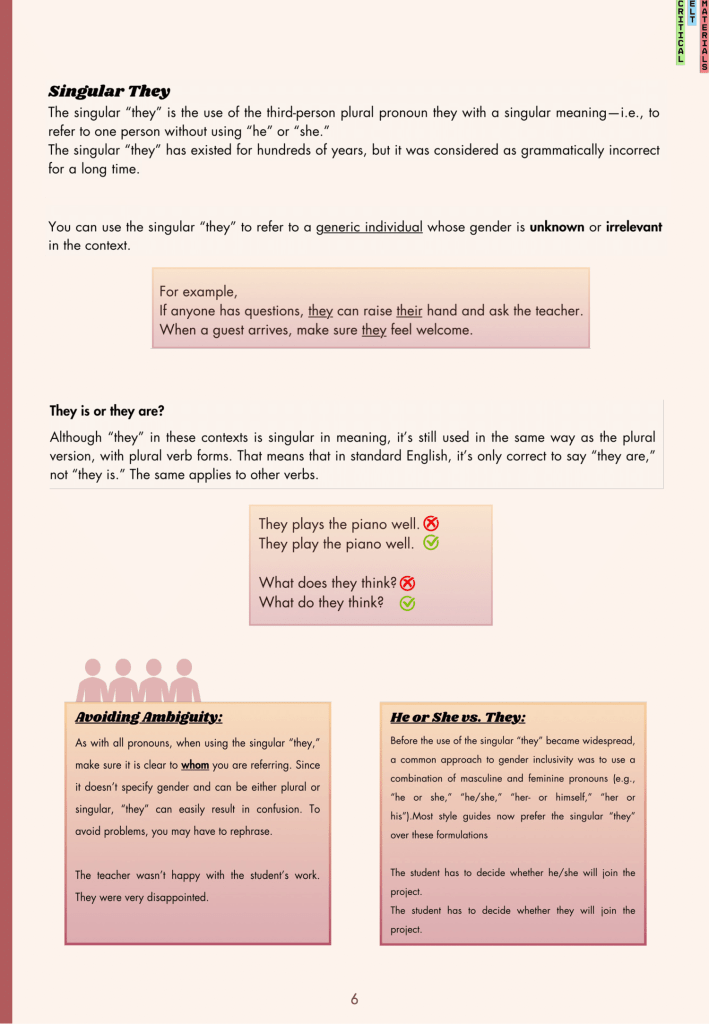
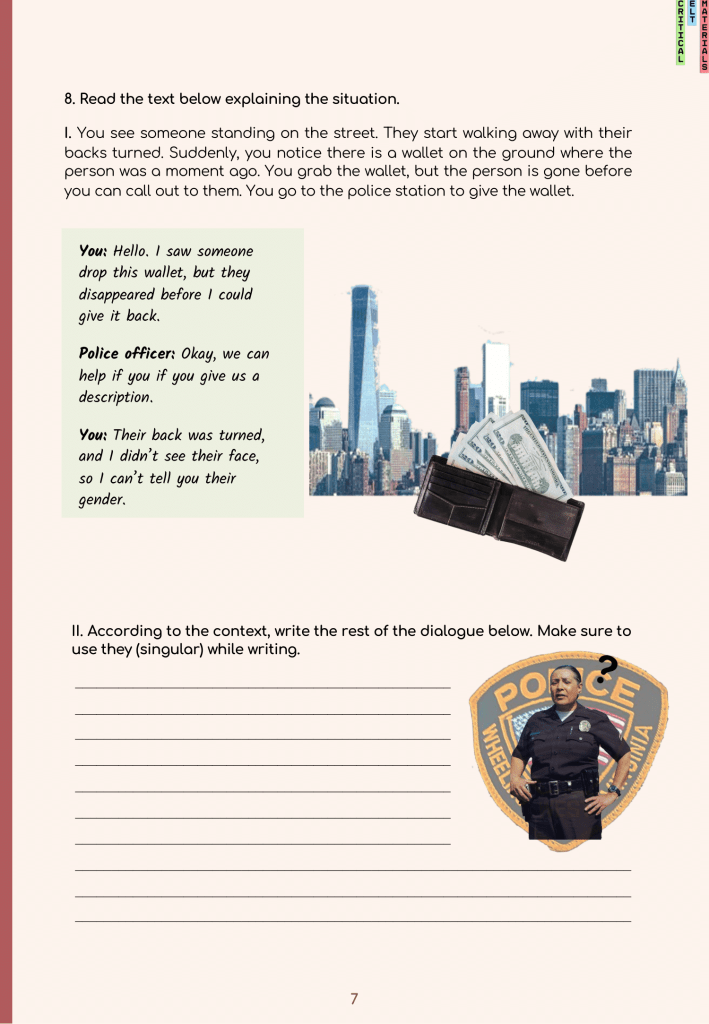
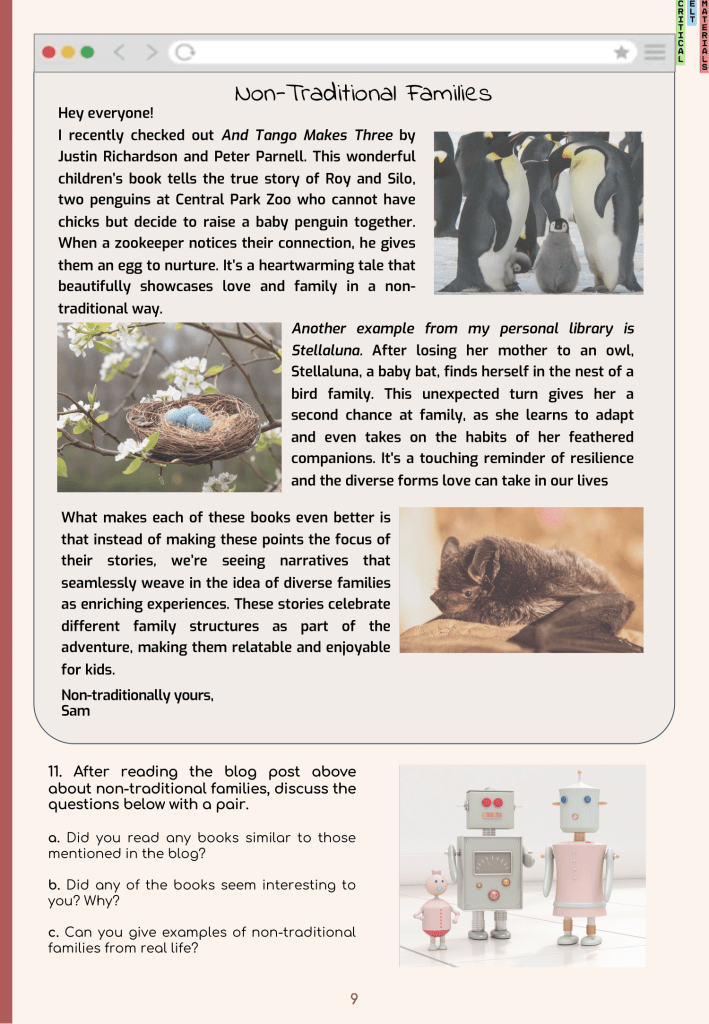
As recent graduates of the Foreign Language Education Department at Middle East Technical University, we had the opportunity to create critical English learning materials under the guidance of our professor, Dr. Yasemin Tezgiden Cakcak. This experience has been incredibly valuable for our personal and professional development. Our material is centered around the idea of gender equality and stereotypes. The main goal of this unit was to make the students aware of the gender stereotypes and inequalities that people face in their daily lives from an early age to adulthood. The unit also includes activities that mention the harms of stereotypes students can face when they are in the workforce, such as pay gaps and tokenism.
Our designing process was challenging. Since our topic was gender equality, we had to be mindful of the subconscious ways we can reinforce certain stereotypes. Hence, we made sure that this material was created in a way that consciously stayed clear of such biases and wording or explicitly showed them to the potential learners. We tried our best to design the material in a way that was both aesthetically pleasing and cohesive. We made sure that all activities were connected to each other in some way, even if they were not direct continuations of the previous activity.
Materials like ours have a crucial role in helping people see the severity and complexity of certain issues. Everyone knows that gender inequality is a problem, and most can spot clear cases of gender discrimination when they see them happening. However, it’s important to explore the underlying factors and implications of these issues to really understand their effects on society. However, it is much harder to realize all the subtle, small ways this inequality persists in our day-to-day lives. For people to be able to realize this and to recognize these small inequalities requires a conscious effort on the person’s part. As such, we need critical materials to bring these subtle problems to the forefront in an obvious and easy-to-observe way for people to start noticing.
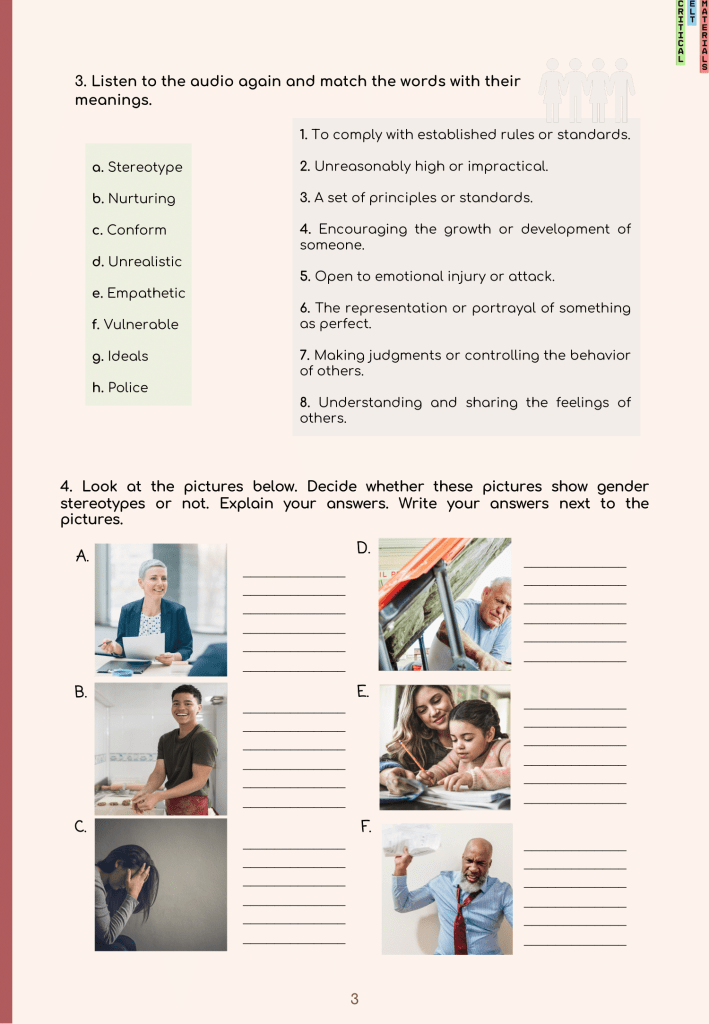
While creating our material, we saw how difficult it was to diverge from our usual ways of thinking, even though we were aware of how biased language could be. It was eye-opening to see just how we considered certain things a given, despite there being no logical reason for it. Why is it considered unusual for a man to cook? Why is it seen as inappropriate for a woman to work as an executive? Why does the idea of a stay-at-home dad feel strange when stay-at-home moms are the norm? And why can’t a little girl play with toy cars? There were a lot of questions we had to answer or, at the very least, put into the activities to make the learners also notice and question the same things. This is why the materials we created not only support language development but also play a vital role in fostering an awareness of stereotypes and identities. Overall, the process was difficult but rewarding. We believe that everyone needs to be aware of our topic, which should be included in every learning material to challenge the stereotypes we all follow without being aware of. Working on the unit highlighted the importance of actively changing our perceptions of gender inequality, proving that starting small can be just as effective.





You can download the full PDF here:



 Critical ELT Materials
Leave a comment