
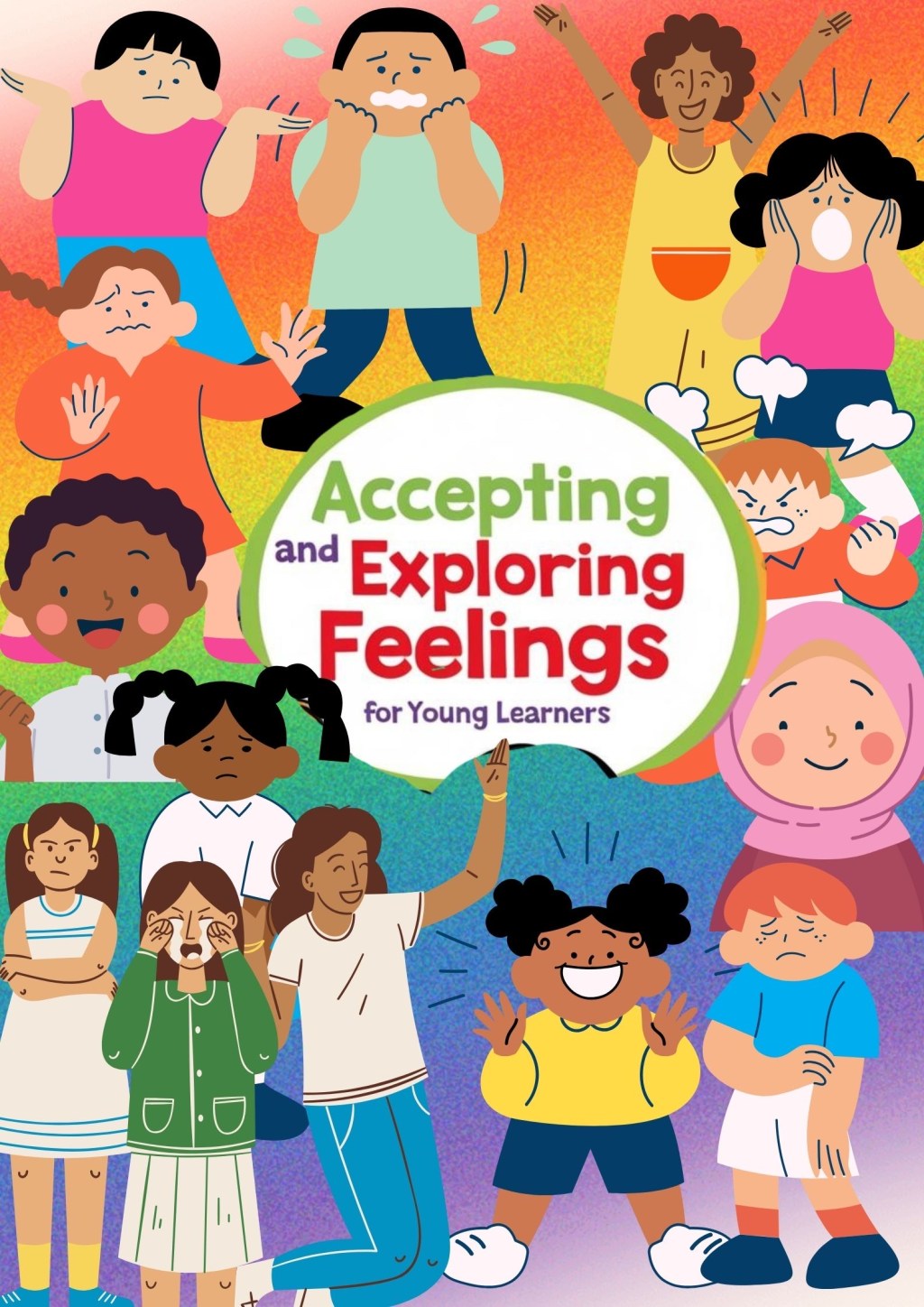
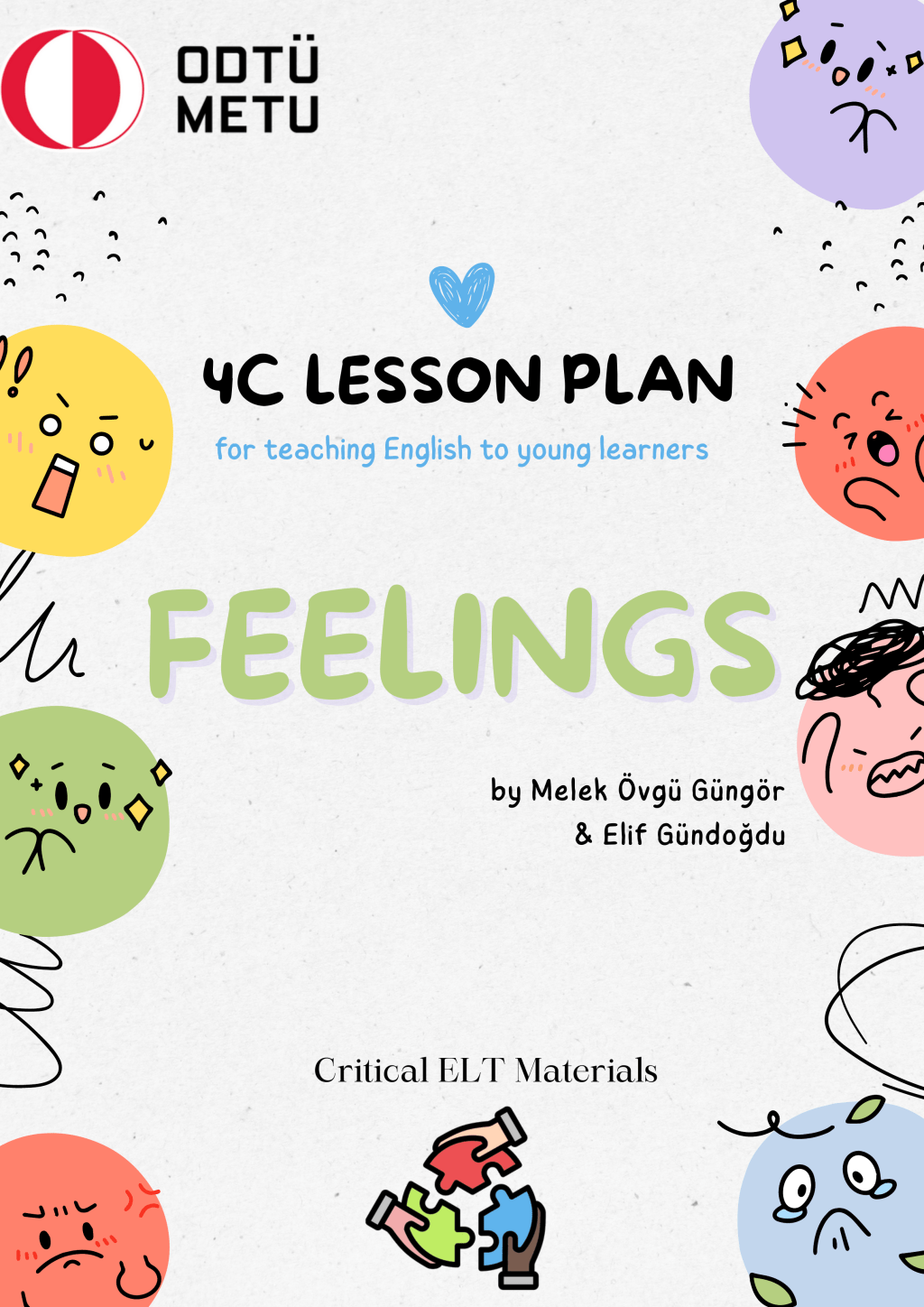
During the days when we focused on exploring our feelings more deeply, our paths crossed and we joined forces to create this lesson plan. Feelings are not merely signals to navigate our moods; they are deeply rooted guides that, when honored, reveal much about who we are. Suppressed, ignored, or confusing emotions can become obstacles in our lives and they also tell us a great deal about our students and their experiences.
While words may sometimes limit our discourse, feelings and nonverbal expressions bring emotional complexities to the surface. In designing this lesson, we aimed to uncover each student’s unique and creative ways of expressing and discovering emotions, all while gaining exposure to the target language. We also wanted to send a clear message: accept every feeling and explore creative strategies for working with them.
After this lesson, we suggest a creative drama activity in which students act out and embody emotions in artistic, original ways reinforcing both their emotional awareness and their language skills.
The lesson abides by the 4C principle:
It is Creative since the drawing activity is flexible, as they can draw the emotions/facial expressions however they like. Thus, there is an engaging video in the lead-in that would motivate and energize the students, and it includes the topic of the lesson, which is feelings, in a normalizing tone. There are also Sticky flashcards that make the dialogue activity more physical than mechanical for young learners, and the homework allows them to use their creativity and autonomy by writing about what makes them feel a specific kind of feeling and then drawing about it.
It is Critical because the critical point is accepting all of the feelings as they are and having a welcoming attitude to each and every feeling. As a hidden curriculum, we also tried to integrate some critical points into the dialogues, such as ‘love yourself’ and feeling sad after seeing captive animals at the zoo. They can share their feelings in various cases by playing the board game in their groups.
It is Communicative as students work not only individually but also in pairs and groups for the activities. As the topic itself is expressing/communicating our feelings, it helps them to talk about their feelings. The teacher interacts with the students, and the students also interact with each other. The board game and the dialogue help them communicate their feelings and learn about empathy and self-compassion in a fun and engaging way.
It is Contextual by using authentic materials and real-life situations and examples that they can relate to. The activities are both personalized and suitable in the context of learning and talking about their feelings. All the materials are given within a context and in a meaningful way.
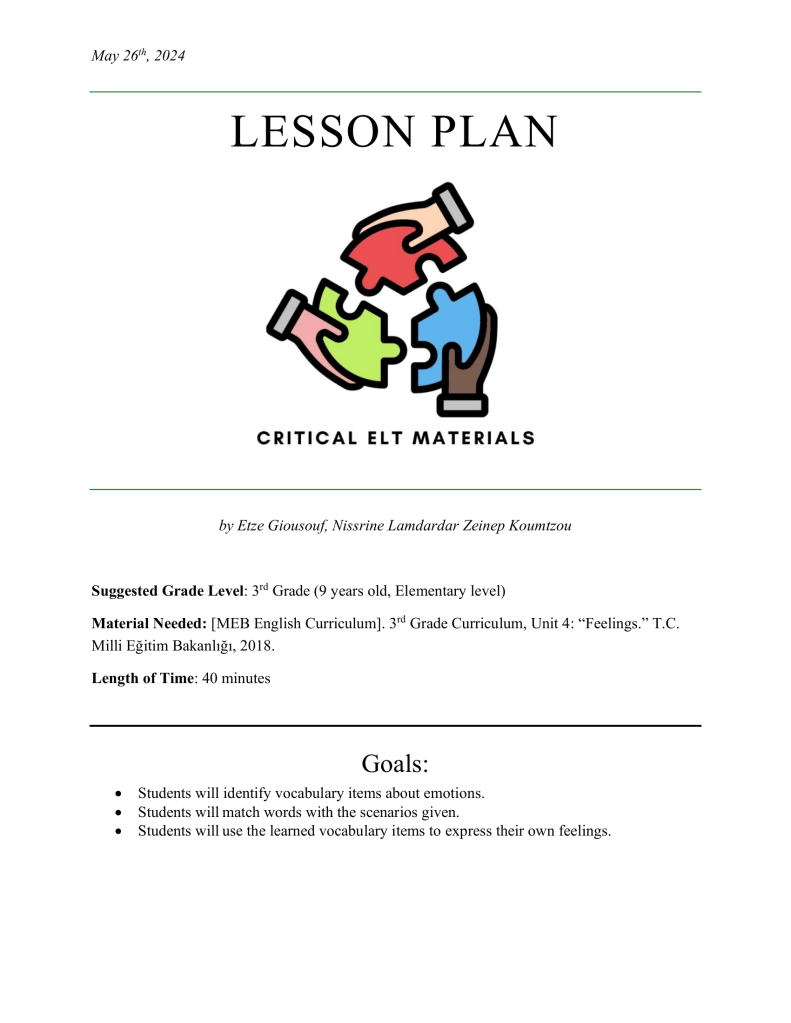
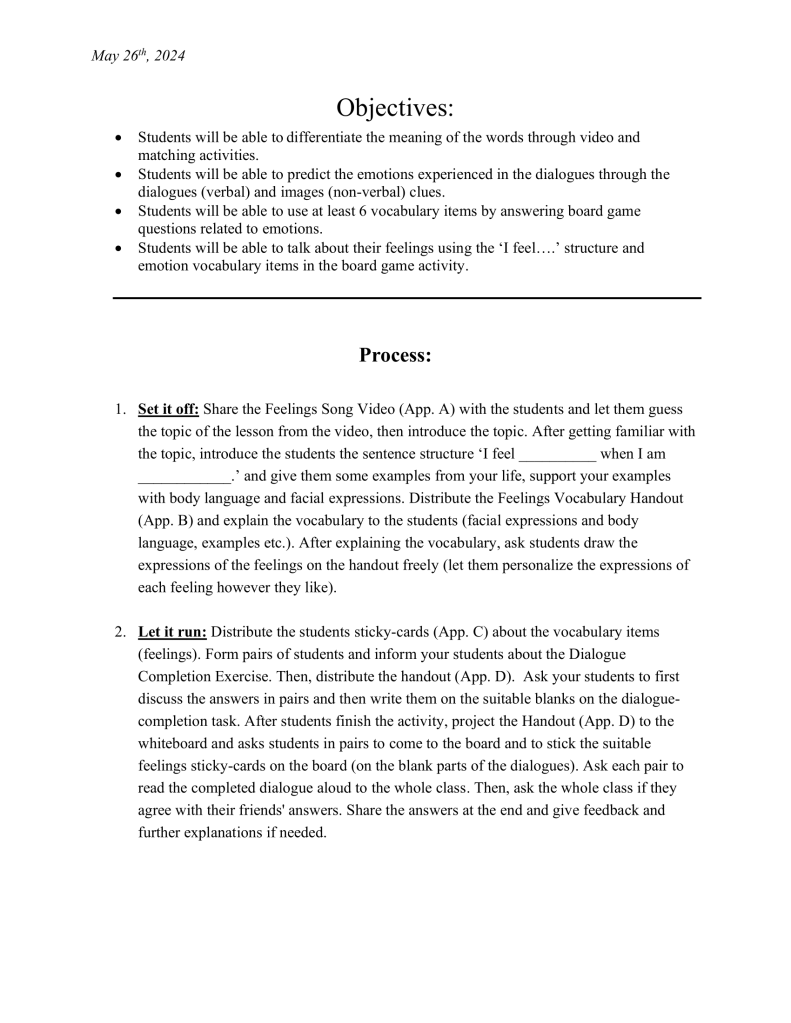
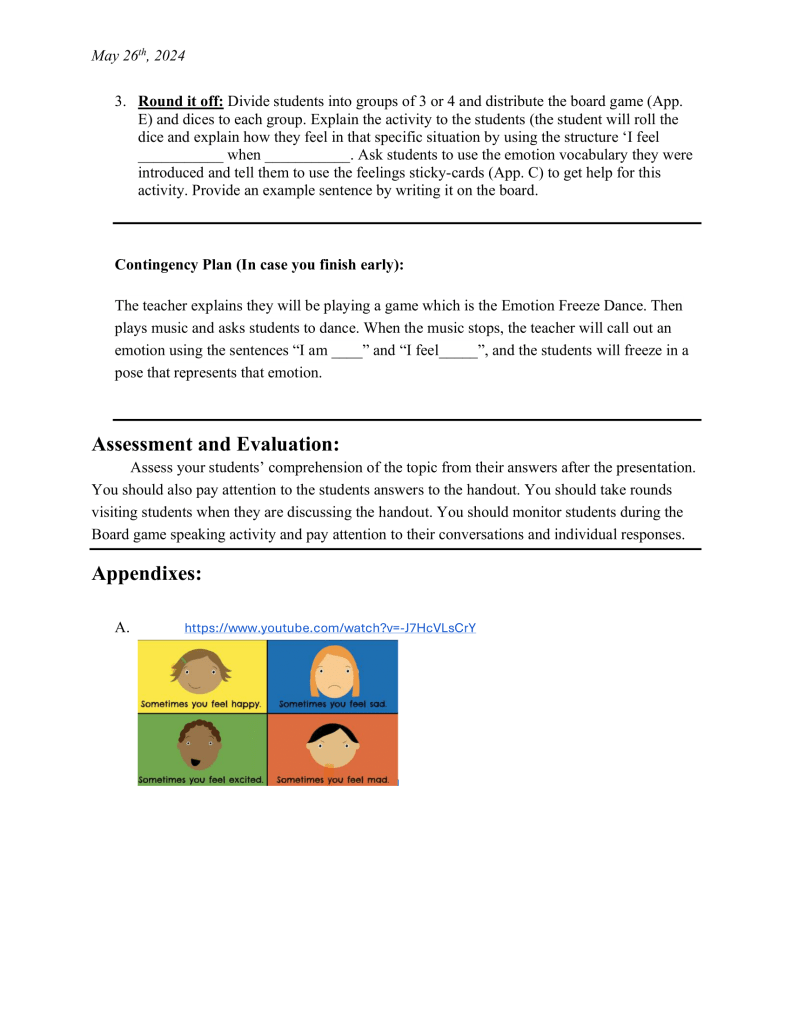

Download the Lesson Plan Here:
Download the Handout Here:
Download the Appendixes Here:




Leave a Reply